
Illumina partners go beyond the genome, driving cancer breakthroughs using spatial transcriptomics, epigenomics, and proteomics
Illumina (NASDAQ: ILMN) highlighted customer breakthroughs in oncology on Feb. 25, 2026, using spatial transcriptomics, 5-base sequencing, proteomics, and Illumina Connected Multiomics.
Rhea-AI Summary
Illumina (NASDAQ: ILMN) highlighted customer breakthroughs in oncology on Feb. 25, 2026, using spatial transcriptomics, 5-base sequencing, proteomics, and Illumina Connected Multiomics. Key claims include whole-transcriptome spatial datasets at 1 µm resolution, >2,000 unique transcripts per cell, and integrated methylation-aware cfDNA insights for harder-to-detect tumors.
Positive
- Whole-transcriptome spatial datasets at 1 µm resolution
- >2,000 unique transcripts detected per cell in breast cancer mapping
- 5-base sequencing enabled genomic+methylation detection in rare tumors
- Integrated Protein Prep plus 5-base resolved a false positive case
Negative
- High reliance on third-party suppliers for critical components
- Customer adoption of new multiomics products remains uncertain
Details
News Market Reaction – ILMN
On Feb 25, the day this news came out, ILMN closed 0.84% below the previous close.
Data tracked by StockTitan Argus for the Feb 25 session.
Key Figures
- Gene transcripts per cell
- more than 2,000 transcripts
- Breast cancer spatial study sensitivity
- Spatial resolution
- 1 µm resolution
- Whole transcriptome spatial datasets for lymphatic vessels
- Advanced-stage ovarian diagnoses
- Nearly 80%
- Share of ovarian cancers diagnosed at advanced stages
- Advanced-stage survival
- About 30%
- Survival rate when ovarian cancer is diagnosed late
- Early-stage survival
- Exceeds 90%
- Survival rate when ovarian cancer is caught early
Historical Context
-
Announced 18‑month NovaSeq X roadmap boosting accuracy, throughput, and speed.
-
Planned webcast of TD Cowen healthcare conference fireside chat for investors.
-
Reported Q4 2025 revenue of $1.16B and flat FY2025 revenue of $4.34B.
-
Sequencing deal with San Diego Zoo Wildlife Alliance for up to 4,000 samples.
-
Closed $350M SomaLogic acquisition plus up to $75M performance milestones.
24h Move is the share-price change in the day after each event; other market factors may also have contributed.
Key Terms
spatial transcriptomics medical
epigenomics medical
proteomics medical
tumor microenvironments medical
ctDNA medical
ffpe medical
cfdna medical
liquid biopsy medical
AI-generated analysis. How Rhea-AI works. Not financial advice.




At AGBT, researchers reveal new findings from studies leveraging Illumina's multiomics solutions
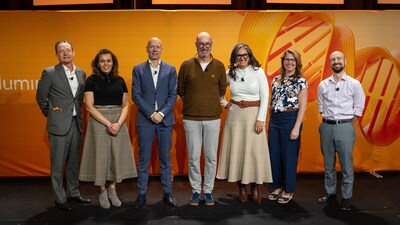
"Unlocking the human genome has changed the face of cancer care and opened up demand for the next wave of biological insights," said Jacob Thaysen, chief executive officer at Illumina. "Researchers are rapidly adopting multiomics and informatics technologies that expand our understanding of biology at scale. Illumina's streamlined multiomics workflows are enabling customers to achieve game-changing breakthroughs in oncology, pharmacogenomics, and more."
Illumina Spatial Technology decodes complex tissues with ease
The human lymphatic system is notoriously difficult to map due to its size and variability among individuals. Spatial technology holds promise to probe biomolecular signatures that can improve the diagnosis and prognosis of cancer and even explain how it metastasizes in the body.
Dr. Ioannis Vlachos, PhD, director of the Spatial Technologies Unit within Beth Israel Deaconess Medical Center (BIDMC), leveraged Illumina Spatial Technology and visualization software to investigate human lymph nodes and lymphatic channels.
"Our research as an NIH HuBMAP Tissue Mapping Center aims to shed light on the complex function of lymphatic vessels, which are exceptionally challenging samples due to their low adhesion, surrounding adipose tissue, and small size. Illumina Spatial Technology generated high-quality data from samples ranging from very small to quite sizable, producing the first ever whole transcriptome spatial datasets for human lymphatic collector vessels," said Vlachos. "The large capture area and serial sections helped us resolve single‑cell‑thick layers and reconstruct three‑dimensional representations of tissue organization with whole transcriptome capture at 1um resolution. Our institution and the broader research community can use these datasets to answer many possible research questions."
In another study conducted by Illumina researchers, Illumina Spatial Technology outperformed other competing technologies for improved sensitivity, higher resolution, and higher throughput at a lower cost.
The study mapped breast cancer progression across a range of precancerous to high-grade ductal carcinomas. Whole-transcriptome profiling revealed unexpected nuances of tumor microenvironments, including identification of a novel set of cancer-associated fibroblasts. Researchers found more than 2000 unique transcripts in each cell, showing an unprecedented level of sensitivity.
"Each tumor is unique and its gene expression is never uniform," said Cande Rogert, vice president and global head of advanced sciences at Illumina. "By interrogating a large surface area of tissue at high resolution, we were able to analyze the tumor genetics within their real context and identify new cell subtypes. The resulting multiomic insights provide additional information and have the potential to drive more precise therapeutic development."
Illumina 5-base solution delivers epigenetic context for cancer diagnostics
A team of researchers from Broad Clinical Labs, working with hospital research partners in
The researchers are seeking genomic alternative approaches. Existing translational research ctDNA assays can miss disease signals in very rare tumors such as Wilms and rhabdoid. Illumina's 5-base solution enabled simultaneous genomic and methylation profiling to add additional epigenomics signals that identify cases missed by conventional approaches.
Illumina 5-base whole genomes from renal cancer patients were tested in methylation-based classifiers and were able to predict the presence of rhabdoid tumors missed by genomics-only methods. Future work will expand 5-base profiling to additional FFPE and cfDNA samples, with the goal of training advanced machine learning models. These efforts may ultimately provide clinicians with more accurate diagnostic insights and improve outcomes for patients.
"Combining these molecular signals in a single, scalable process can help us develop non-invasive diagnostics for cancers," said Carrie Cibulskis, director of cancer genomics at Broad Clinical Labs. "We're working toward a minimally invasive methylation-aware assay for cancer diagnosis and treatment selection."
Integrated multiomics improves understanding of advanced ovarian cancer
Nearly
Bodour Salhia, PhD, a professor of cancer biology at the University of
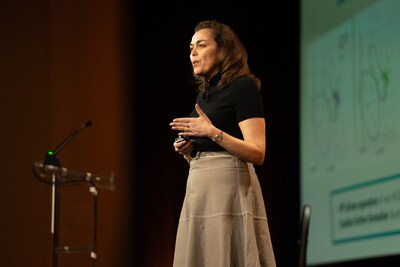
"These findings create a multiomic framework for ovarian cancer research and lay the groundwork for an effective liquid biopsy in particularly challenging ovarian cancers with the potential to transform diagnostic practices and outcomes," said Salhia. "Layering the omics gave us a winning combination, providing more context for earlier cancer identification."
Illumina's 5-base solution allowed for sensitive, integrated genetic and methylation analysis of tumor samples without compromising specificity. The methylation signals separated malignant and benign samples better than traditional approaches, which can often fail to separate cell types.
Illumina Protein Prep allowed the researchers to identify novel gene sets, proteins, and pathways in ovarian cancer, creating new lines of inquiry in cancer biology research, biomarker and drug development. Layering Protein Prep and 5-base data through a custom pipeline in Illumina Connected Multiomics quickly resolved a false positive case.
The layered approach helped researchers establish parameters for targeted exploration of gene expression in spatial data. Using Illumina Spatial Technology, transcriptomic data helped to resolve signals driving false positive results.
Illumina Connected Multiomics accelerates sample-to-answer pipeline
Multimodal analytics from Illumina Connected Multiomics provides deeper insights and overcomes the fragmented, siloed views produced by isolated assays, empowering researchers with a new understanding of cancer mechanisms, tumor heterogeneity, and potential therapeutic targets.
Illumina unveiled new product updates and customer data during the Gold Sponsor Workshop at the Advances in Genome Biology and Technology (AGBT) annual meeting in
Use of forward-looking statements
This release may contain forward-looking statements that involve risks and uncertainties. Among the important factors to which our business is subject that could cause actual results to differ materially from those in any forward-looking statements are: (i) challenges inherent in researching, developing and launching new technologies, including modifying and scaling manufacturing operations, and reliance on third-party suppliers for critical components; (ii) our ability to manufacture robust instrumentation and consumables and develop reliable software solutions; (iii) our ability to deploy new products, services, and applications, and to expand the markets for genomics-related products and services, and (iv) the acceptance and adoption by customers of our newly launched or updated products, which may or may not meet our and their expectations, together with other factors detailed in our filings with the Securities and Exchange Commission, including our most recent filings on Forms 10-K and 10-Q, or in information disclosed in public conference calls, the date and time of which are released beforehand. We undertake no obligation, and do not intend, to update these forward-looking statements, to review or confirm analysts' expectations, or to provide interim reports or updates on the progress of the current quarter.
About Illumina
Illumina is improving human health by unlocking the power of the genome. Our focus on innovation has established us as a global leader in DNA sequencing and array-based technologies, serving customers in the research, clinical, and applied markets. Our products are used for applications in the life sciences, oncology, reproductive health, agriculture, and other emerging segments. To learn more, visit illumina.com and connect with us on X, Facebook, LinkedIn, Instagram, TikTok, and YouTube.
Contacts
Investors:
Illumina Investor Relations
858-291-6421
IR@illumina.com
Media:
Christine Douglass
PR@illumina.com
 View original content to download multimedia:https://www.prnewswire.com/news-releases/illumina-partners-go-beyond-the-genome-driving-cancer-breakthroughs-using-spatial-transcriptomics-epigenomics-and-proteomics-302696646.html
SOURCE Illumina, Inc.
FAQ
AI-generated questions and answers. How Rhea-AI works. Not financial advice.