
What Runners Get Wrong About Getting Faster and Staying Injury-Free
Life Time (NYSE:LTH) highlights why runners seeking speed and injury resistance need consistent strength training, not just more miles.
Rhea-AI Summary
Life Time (NYSE:LTH) highlights why runners seeking speed and injury resistance need consistent strength training, not just more miles. Expert coaches explain that building muscular, tendon and ligament strength lowers injury risk and supports faster recovery.
Life Time’s GTX and Ultra Fit Signature Group Training classes provide structured strength, power, conditioning and sprint intervals that complement any running plan. Coaches recommend key movements—Bulgarian split squats, calf raises, kettlebell swings and single-leg deadlifts—and suggest starting with short, social 20-minute runs for Global Running Day and beyond.
Positive
- None.
Negative
- None.
Details
News Market Reaction – LTH
In the Jun 3 session, LTH declined 1.18%, reflecting a mild negative market reaction.
Data tracked by StockTitan Argus on the day of publication.
Key Figures
- Beginner run duration
- 20 minutes
- Suggested maximum continuous movement for new runners
- Strength frequency
- Two to three sessions per week
- Recommended weekly strength training volume for runners
- GTX structure
- 50/50
- Split between strength and conditioning in GTX sessions
- GTX session length
- 60 minutes
- Duration of GTX Signature Group Training classes
Historical Context
-
Introduced Dynamic Nutrition Coaching across 190+ athletic country clubs.
-
Hosted sold-out Chicago Spring Half Marathon & 5K with 9,500 runners.
-
Highlighted National Water Safety Month with extensive swim-safety guidance.
-
Acquired Phoenix 10K, adding to portfolio of 30 athletic events.
-
Announced private repurchase of 2,192,500 shares at $28.60 per share.
24h Move is the share-price change in the day after each event; other market factors may also have contributed.
Key Terms
bulgarian split squats medical
calf raises medical
single-leg deadlifts medical
sprint interval training medical
metabolic health medical
AI-generated analysis. How Rhea-AI works. Not financial advice.





Life Time coaches reveal why strength training, not just more miles, is the breakthrough, and how GTX and Ultra Fit help runners of every level unlock it this Global Running Day and beyond
Key Highlights:
- Expert Life Time coaches say strength training is the most overlooked piece of a runner's program, and it is essential for prevention of injury, faster recovery and long-term performance.
- GTX and Ultra Fit, two of Life Time's exclusive Signature Group Training formats, give runners the strength, power and variety to build and complement a running schedule.
- Life Time experts share their top tips for first-time runners, the four strength movements every runner should be doing, and how to make Global Running Day the start of a lasting habit.
Life Time coaches say that building the strength to handle that load is what separates runners who progress from runners who plateau or get sidelined by injury. It is also what makes Life Time's GTX and Ultra Fit programs natural complements to any running routine, whether a member is lacing up for the first time today or training for the next marathon.
"Running is the most global sport we have. There are no barriers, just movement," said Frankie Ruiz, Chief Running Officer at Life Time and Co-Founder of the Miami Marathon. "Global Running Day is an invitation for anyone, anywhere, to take that first step and realize we get more out of it when we do it together. At Life Time, we see every day how one run can spark connection, confidence, and even change the course of someone's life."
For new and experienced runners alike: Strength work is an essential ingredient in finding success. It can aid with muscular endurance, power, joint stability and much more (NASM).
"Strength training for newer runners is essential because we are training not only the resilience of our muscles, but our tendons and ligaments are getting stronger as well," said Donovan Stewart, Certified Personal Trainer and Run Coach at Life Time. "With hundreds of pounds of force happening on our bodies during a run, having the strength to support us will provide a lower chance of injury and help with coming back from injury quicker."
To build that foundation, Stewart recommends focusing on four essential movements every runner should master:
- Bulgarian Split Squats
- Calf Raises
- Kettlebell Swings
- Single-Leg Deadlifts
Where GTX and Ultra Fit Slot In
Life Time's GTX and Ultra Fit Signature Group Training classes are designed to build strength, power and conditioning that running alone cannot deliver. GTX uses a 50/50 structure that layers strength and conditioning into 60-minute sessions led by certified coaches. Ultra Fit blends total-body strength with challenging balance work and sprint interval training, building the metabolic health and mental resilience that runners rely on at every distance.
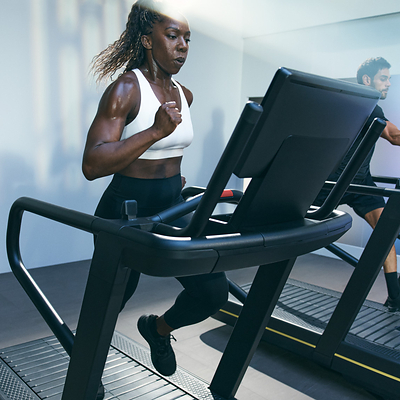
Together, the two formats give runners progressive overload, mobility work, and group motivation inside one membership, along with access to best-in-class treadmills, recovery amenities and Life Time's portfolio of athletic events to work toward.
Tips for New Runners on Global Running Day
For those lacing up for the first time this Global Running Day, Ruiz emphasizes one mindset: start small, stay consistent and make it social:
- Run less and slower than you think you should. Move for no more than 20 minutes.
- Do it with others. Keep it social and conversational. Joining a group is the best way to start.
- Do not skip your warm-up, even if it is just a brisk walk.
"Global Running Day reminds us that while running can feel personal, its real power is collective," Ruiz said. "Different reasons, same direction. We move, we grow, we inspire ourselves and others. Through Life Time events and communities, we are creating spaces where that shared energy turns a simple run into something much bigger."
For more information about Life Time, visit www.lifetime.life, follow on social media at Facebook, Instagram and LinkedIn, or download the Life Time app. You can also find Life Time's collection of supplements, equipment and apparel on the LT Shop by following its Instagram page.
Frequently Asked Questions
Why should runners do strength training? Strength training builds the muscles, tendons and ligaments that absorb the repeated impact of running.
What are the best strength exercises for runners?
Life Time Trainer and Certified Run Coach Donovan Stewart recommends Bulgarian split squats, calf raises, kettlebell swings and single-leg deadlifts. These moves target the lower body, aid with balance and posterior strength that runners rely on.
How often should runners strength train?
Life Time trainers recommend two to three strength sessions per week, layered in alongside easy runs and recovery days. GTX and Ultra Fit classes are built to deliver that strength stimulus in a structured group setting. Ultra Fit can also slot in as a high-intensity workout in weekly training.
About Life Time
Life Time (NYSE: LTH) empowers people to live healthy, happy lives through its more than 190 athletic country clubs across the U.S. and Canada, the complimentary and comprehensive Life Time app featuring its L•AI•C™ AI-powered health companion, and more than 30 iconic athletic events. Serving people ages 90 days to 90+ years, the Life Time ecosystem uniquely delivers healthy living, healthy aging, and healthy entertainment experiences, a range of unique healthy way of life programs, highly trusted LTH nutritional supplements and more. Recognized as a Great Place to Work®, the company is committed to upholding an exceptional culture for its more than 50,000 team members.
 View original content to download multimedia:https://www.prnewswire.com/news-releases/what-runners-get-wrong-about-getting-faster-and-staying-injury-free-302789673.html
SOURCE Life Time, Inc.
FAQ
AI-generated questions and answers. How Rhea-AI works. Not financial advice.