
U.S. FDA Grants Priority Review to BeOne Medicines’ BRUKINSA Combination in First-Line Mantle Cell Lymphoma
MANGROVE met its primary endpoint, with a 43% reduction in progression or death risk versus bendamustine plus rituximab.
Sentiment and the balance of points
Rhea-AI Sentiment reads the wording of the document, how positive or negative its language is on a 1 to 5 scale. The balance of points shown with the takes weighs what the document actually discloses, so the two can disagree, for example when a trial that missed its main goal is described in upbeat language.


If approved, BRUKINSA plus rituximab would be the first and only chemotherapy-free, BTK inhibitor-based regimen for adult patients with previously untreated mantle cell lymphoma
Application supported by Phase 3 MANGROVE data, showing a
Full MANGROVE results to be presented during the Plenary Scientific Session at the 68th American Society of Hematology Annual Meeting
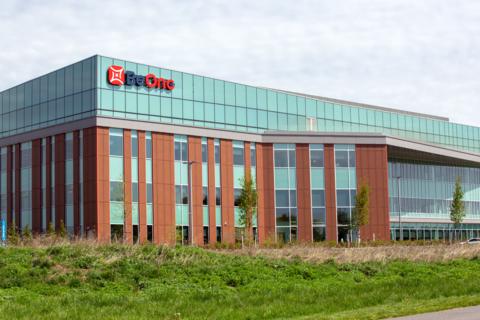
BeOne Medicines' flagship
Amit Agarwal, M.D., Ph.D., Chief Medical Officer, Hematology, BeOne Medicines, said:
“In newly diagnosed mantle cell lymphoma, chemoimmunotherapy remains a mainstay of frontline treatment despite the toxicity burden it carries. The FDA’s acceptance of our application brings us closer to a chemotherapy-free, BRUKINSA-based option that significantly reduces the risk of disease progression or death. BRUKINSA's ability to drive deeper, more powerful responses is what makes a chemotherapy-free approach now possible. We look forward to working closely with the FDA to make our foundational BTK inhibitor available to patients as quickly as possible.”
Filing based on potentially transformative MANGROVE results
The sNDA is supported by data from MANGROVE (BGB-3111-306), a global, randomized, Phase 3 trial evaluating BRUKINSA plus rituximab versus bendamustine plus rituximab (BR) in adult patients with previously untreated MCL. In the trial, BRUKINSA plus rituximab reduced the risk of progression or death by
A supplemental new drug application for BRUKINSA for the treatment of MCL has also been submitted to the European Medicines Agency (EMA) and accepted by the Center for Drug Evaluation (CDE) of the China National Medical Products Administration (NMPA).
BRUKINSA is currently approved in the
About MANGROVE
MANGROVE is a global, randomized, open-label Phase 3 trial evaluating BRUKINSA plus rituximab versus bendamustine plus rituximab in adult patients with previously untreated mantle cell lymphoma. The trial enrolled 510 patients across 157 active sites worldwide and is the first Phase 3 trial to evaluate a chemotherapy-free, BTK inhibitor-based regimen against standard chemoimmunotherapy with BR in the frontline MCL setting.
In the experimental arm, patients received BRUKINSA at 160 mg orally twice daily plus rituximab during the initial treatment period, followed by BRUKINSA monotherapy until disease progression or intolerance. In the control arm, patients received bendamustine plus rituximab for six cycles. The primary endpoint is PFS assessed by IRC. Overall survival is a key secondary endpoint for the study. Other secondary endpoints include investigator-assessed PFS, overall response rate (ORR), duration of response (DOR), patient-reported outcomes, and safety.
About BRUKINSA® (zanubrutinib)
BRUKINSA is a next-generation Bruton tyrosine kinase (BTK) inhibitor designed to deliver complete and sustained BTK inhibition, enabled by optimized pharmacokinetics, including bioavailability, half-life, and selectivity, resulting in consistent target coverage in disease-relevant tissues.
BRUKINSA is the foundational BTK inhibitor and the first and only to demonstrate progression-free survival superiority over another BTK inhibitor in a Phase 3 study, setting a new benchmark for efficacy in the class. With the broadest label globally, it is also the only BTK inhibitor that offers the convenience of once- or twice-daily dosing to support individualized treatment.
The global BRUKINSA clinical development program spans more than 8,000 patients across over 45 trials in 30+ countries and regions. Approved in more than 80 markets, BRUKINSA has been used to treat over 310,000 patients worldwide, reflecting its rapidly expanding role as a standard of care across B-cell malignancies.
Select Important Safety Information for BRUKINSA
Serious adverse reactions, including fatal events, have occurred with BRUKINSA, including hemorrhage, infections, cytopenias, second primary malignancies, cardiac arrhythmias, and hepatotoxicity (including drug-induced liver injury).
In the pooled safety population (N=1729), the most common adverse reactions (≥
Please see full
About BeOne
BeOne Medicines is a global oncology company that is discovering and developing innovative treatments for cancer patients worldwide. With a portfolio spanning hematology and solid tumors, BeOne is expediting development of its diverse pipeline of novel therapeutics through its internal capabilities and collaborations. The Company has a growing global team spanning six continents who are driven by scientific excellence and exceptional speed to reach more patients than ever before.
To learn more about BeOne, please visit www.beonemedicines.com and follow us on LinkedIn, X, Facebook and Instagram.
Forward-Looking Statement
This press release contains forward-looking statements within the meaning of the Private Securities Litigation Reform Act of 1995 and other federal securities laws, including statements regarding the FDA’s review of the sNDA for BRUKINSA in combination with rituximab for adult patients with previously untreated MCL, including the timing and outcome of that review; the potential for BRUKINSA plus rituximab, if approved, to be the first and only chemotherapy-free, BTK inhibitor-based regimen for adult patients with previously untreated MCL; the potential benefits of BRUKINSA plus rituximab for these patients; BeOne’s plans to make BRUKINSA available to these patients; the planned presentation of full results from the MANGROVE study at the 68th ASH Annual Meeting; the review of BeOne’s applications for BRUKINSA in MCL by the CDE of the NMPA and the EMA; BRUKINSA’s role in the treatment of B-cell malignancies; and BeOne’s plans, commitments, aspirations, and goals under the heading “About BeOne.” Actual results may differ materially from those indicated in the forward-looking statements as a result of various important factors, including BeOne's ability to demonstrate the efficacy and safety of its drug candidates; the clinical results for its drug candidates, which may not support further development or marketing approval; actions of regulatory agencies, which may affect the initiation, timing, and progress of clinical trials and marketing approval; BeOne's ability to achieve commercial success for its marketed medicines and drug candidates, if approved; BeOne's ability to obtain and maintain protection of intellectual property for its medicines and technology; BeOne's reliance on third parties to conduct drug development, manufacturing, commercialization, and other services; BeOne’s limited experience in obtaining regulatory approvals and commercializing pharmaceutical products and its ability to obtain additional funding for operations and to complete the development of its drug candidates and achieve and maintain profitability; and those risks more fully discussed in the section entitled “Risk Factors” in BeOne’s most recent quarterly report on Form 10-Q, as well as discussions of potential risks, uncertainties, and other important factors in BeOne's subsequent filings with the U.S. Securities and Exchange Commission. All information in this press release is as of the date of this press release, and BeOne undertakes no duty to update such information unless required by law.
To access BeOne media resources, please visit our Newsroom.
View source version on businesswire.com: https://www.businesswire.com/news/home/20261103605806/en/
Investor Contact
Liza Heapes
+1 857-302-5663
ir@beonemed.com
Media Contact
Navneet Miller
+1 857-301-6440
media@beonemed.com
Source: BeOne Medicines Ltd.