
DAT: Truckload freight rates hit two-year highs as diesel costs surge
DAT Freight & Analytics reported that truckload demand and rates rose in March 2026 as diesel costs surged.
Sentiment and the balance of points
Rhea-AI Sentiment reads the wording of the document, how positive or negative its language is on a 1 to 5 scale. The balance of points shown with the takes weighs what the document actually discloses, so the two can disagree, for example when a trial that missed its main goal is described in upbeat language.
Rhea-AI Summary
DAT Freight & Analytics reported that truckload demand and rates rose in March 2026 as diesel costs surged. The DAT Truckload Volume Index climbed across equipment: Van +12%, Reefer +7%, Flatbed +18%. Spot and contract rates reached two‑year highs, driven mainly by fuel surcharge increases.
Spot van, reefer, and flatbed rates rose to $2.52, $2.97, and $3.09 per mile respectively; contract rates also increased, and fuel surcharges jumped markedly, compressing linehaul margins.
Positive
- Van TVI +12% month‑over‑month
- Flatbed TVI +18% month‑over‑month
- Spot van rate $2.52 per mile (up 53¢ YoY)
- Contract rates rose across modes (van, reefer, flatbed)
Negative
- Van fuel surcharge rose from 41¢ to 61¢ per mile
- Fuel surcharge increases compressed linehaul margins
- Linehaul (ex‑fuel) van and reefer rates declined month‑over‑month
Details
News Market Reaction – ROP
On Apr 14, the day this news came out, ROP closed 0.66% below the previous close.
Data tracked by StockTitan Argus for the Apr 14 session.
Key Figures
- Van TVI
- 253
- March 2026 DAT Truckload Volume Index, up 12% vs February
- Reefer TVI
- 196
- March 2026 DAT Truckload Volume Index, up 7% vs February
- Flatbed TVI
- 314
- March 2026 DAT Truckload Volume Index, up 18% vs February
- Spot van rate
- $2.52 per mile
- March national average, up $0.11 vs February
- Spot reefer rate
- $2.97 per mile
- March national average, up $0.09 vs February
- Spot flatbed rate
- $3.09 per mile
- March national average, up $0.37 vs February
- Van fuel surcharge
- $0.61 per mile
- March average, up from $0.41 and highest since late 2022
- Contract flatbed rate
- $3.43 per mile
- March contract rate, up $0.30 month over month
Historical Context
-
Announcement of Q1 2026 results release and conference call details.
-
DAT and U.S. Bank report modest uptick in early-2026 truck freight rates.
-
Aderant completes SOC 2 Type 2 exam for Onyx cloud platform controls.
-
DAT showcases new tools and education sessions at MATS 2026 trucking show.
-
Aderant introduces AI-powered evaluation and performance intelligence features.
24h Move is the share-price change in the day after each event; other market factors may also have contributed.
Key Terms
spot rates financial
fuel surcharge financial
linehaul rates financial
AI-generated analysis. How Rhea-AI works. Not financial advice.




PORTLAND, Ore., April 14, 2026 (GLOBE NEWSWIRE) -- Truckload freight volumes rose across all major equipment types in March while a sharp jump in fuel costs pushed spot and contract rates to their highest levels in more than two years, reported DAT Freight & Analytics, provider of the industry's leading load boards and freight analytics.
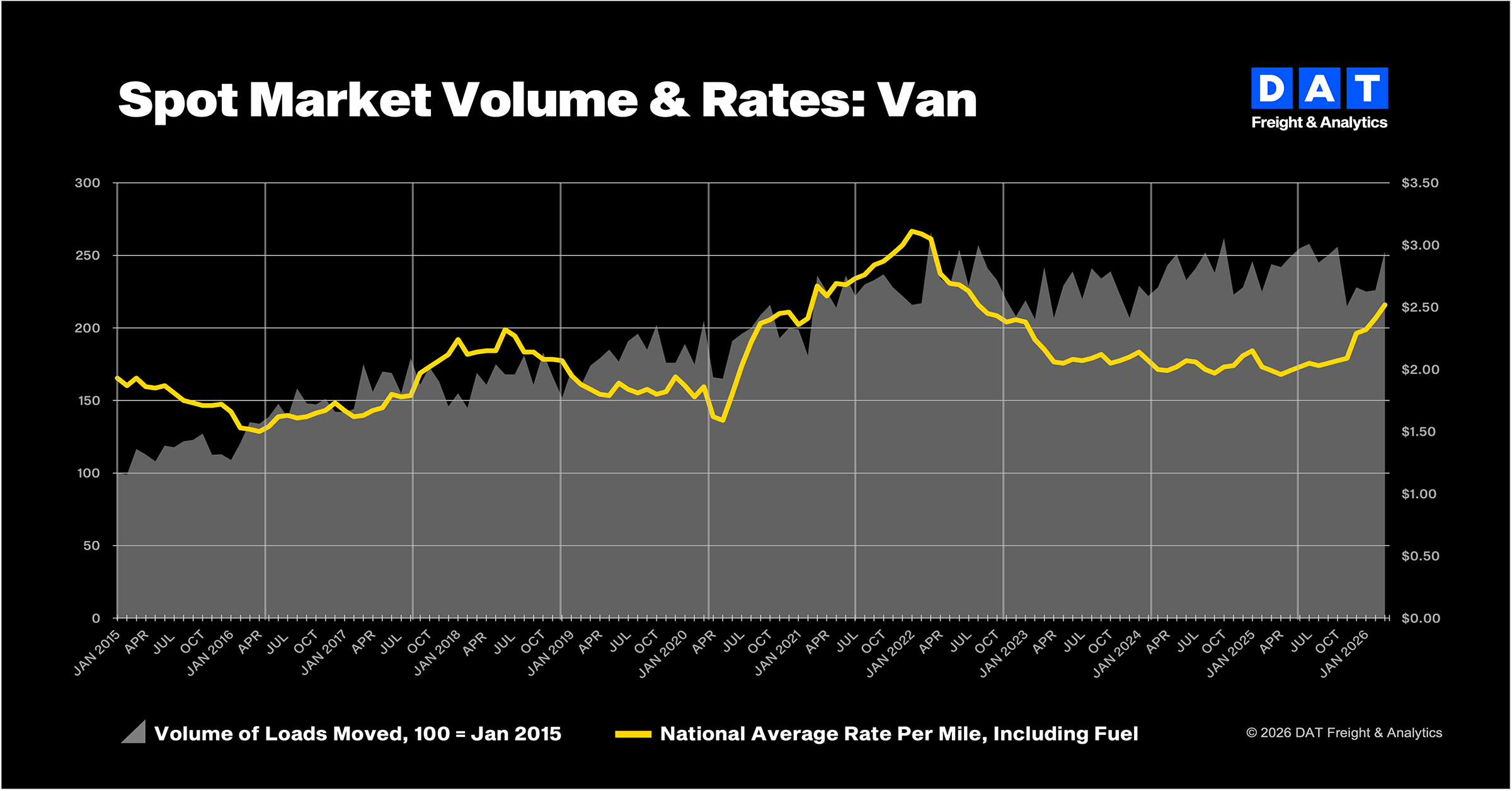
The DAT Truckload Volume Index (TVI), which measures demand for truckload services, increased month over month, reflecting strong early-season demand to move retail goods, produce, and construction and industrial equipment:
- Van TVI: 253, up
12% compared to February - Reefer TVI: 196, up
7% - Flatbed TVI: 314, up
18%
Spot pricing: Fuel drives freight rates higher
National average truckload spot rates increased in March, driven almost entirely by fuel cost recovery:
- Spot van rate:
$2.52 per mile, up 11 cents from February - Spot reefer rate:
$2.97 per mile, up 9 cents - Spot flatbed rate:
$3.09 per mile, up 37 cents
Spot rates, which are negotiated between the freight broker and carrier as all-in rates with no separate fuel surcharge, were substantially higher across all modes year over year. The average spot van rate was up 53 cents from March 2025, the reefer rate was up 70 cents, and spot flatbed rates increased 56 cents.
Van and reefer spot linehaul rates—the portion of the rate excluding fuel—surged toward the end of March as shippers rounded out Q1, but actually declined month over month, falling 9 cents and 13 cents, respectively. Flatbed was the exception: the average linehaul rate rose 13 cents. “Linehaul rates were still under pressure through most of March, which tells you demand hasn’t fully caught up yet,” said Ken Adamo, DAT Chief of Analytics.
The national average diesel fuel surcharge surged across all equipment types, compressing linehaul margins even as total rates climbed. Last month’s average van fuel surcharge rose from 41 cents to 61 cents per mile, the highest since late 2022. The reefer surcharge climbed 22 cents, to 67 cents per mile, and the flatbed surcharge rose 24 cents, to 73 cents per mile.
“For context, monthly average van fuel surcharges averaged around 40 cents per mile throughout most of 2025,” Adamo said. “The March reading represents a
Contract rates: Moving higher with fuel
Contract freight rates increased sharply in March, driven largely by the same fuel-cost dynamics that affect the spot market.
- Contract van rate:
$2.72 per mile, up 20 cents month over month - Contract reefer rate:
$3.10 per mile, up 22 cents - Contract flatbed rate:
$3.43 per mile, up 30 cents
As shippers and carriers navigate RFP season in this environment, Adamo offered a pointed assessment of current trucking industry trends and freight pricing strategies. “Right now, the smartest players are pricing contracts based on where they believe the market is going and being transparent about those assumptions, leaving room to adjust if conditions change,” Adamo said.
For previous TVI reports, visit: https://www.dat.com/news-releases
About the Truckload Volume Index
The DAT Truckload Volume Index measures monthly changes in loads with a pickup date during that month. A baseline of 100 equals the number of loads moved in January 2015, based on data from DAT RateView, part of the DAT iQ freight analytics platform, which tracks rates paid on actual shipments. Benchmark spot rates reflect invoice data for hauls of 250 miles or more, offering a consistent view of truckload demand and spot rate trends across the United States and Canada.
About DAT Freight & Analytics
DAT Freight & Analytics operates the DAT One truckload freight marketplace; Convoy Platform, an automated freight-matching technology; DAT iQ analytics service; Trucker Tools load-visibility platform; and Outgo factoring and financial services for truckers. Shippers, transportation brokers, carriers, news organizations, and industry analysts rely on DAT for market trends and data insights, informed by nearly 700,000 daily load posts and a database exceeding
Founded in 1978, DAT is a business unit of Roper Technologies (Nasdaq: ROP), a constituent of the Nasdaq 100, S&P 500, and Fortune 1000. Headquartered in Portland, Oregon, DAT continues to set the standard for innovation in the trucking and logistics industry. Visit dat.com for more information.
Contact:
Georgia Jablon
904 305-6454
pr@dat.com
A photo accompanying this announcement is available at https://www.globenewswire.com/NewsRoom/AttachmentNg/9b787594-95cb-432d-b936-e2395c33927e

FAQ
AI-generated questions and answers. How Rhea-AI works. Not financial advice.