STOCK TITAN

FLOWERS FOODS NAMES DAVID ROACH CHIEF DSD OPERATIONS OFFICER

Rhea-AI Impact
(Neutral)
Rhea-AI Sentiment
(Neutral)
Tags

Flowers Foods (NYSE: FLO) named David Roach chief DSD operations officer on Feb. 9, 2026, a newly created role giving him P&L responsibility for the company's direct-store-delivery operations and reporting to Heeth Varnedoe.

The company also consolidated its cake business into a new division led by Dan Scott. Flowers reported 2024 net sales of $5.1 billion.

Loading...
Loading translation...

Positive

  • None.

Negative

  • None.

Key Figures

Net sales: $5.1 billion Industry experience: 30 years Protein content: 22 grams +5 more
8 metrics
Net sales $5.1 billion 2024 net sales reported by Flowers Foods
Industry experience 30 years David Roach’s experience with Flowers Foods
Protein content 22 grams Per two slices of Life Wheat + Protein bread
Fiber content 9 grams Per serving of Life Wheat + Protein bread
Breakfast bar price $5.99 Suggested retail price for 5-count multipack
Protein bar content 10 g Plant-based protein per Amped-Up protein bar
Supreme Sourdough price $6.99 Suggested retail price in West Coast markets
Short interest 10.32% Short percent of float from risk context

Market Reality Check

Price: $11.82 Vol: Volume 3,368,597 vs 20-da...
normal vol
$11.82 Last Close
Volume Volume 3,368,597 vs 20-day average 3,775,888, indicating slightly lighter-than-normal activity. normal
Technical Shares at $11.96, trading below 200-day MA of $13.90 and about mid-range between 52-week low and high.

Peers on Argus

FLO gained 0.42% while several peers also traded higher (e.g., FRPT +4.41%, CENT...

FLO gained 0.42% while several peers also traded higher (e.g., FRPT +4.41%, CENTA +4%), but no peers appeared in the momentum scanner, suggesting today’s move was more stock-specific than part of a broad sector rotation.

Historical Context

5 past events · Latest: Jan 28 (Neutral)
Pattern 5 events
Date Event Sentiment Move Catalyst
Jan 28 Earnings timing update Neutral -0.5% Set dates for Q4 and full-year 2025 financial results and webcast.
Jan 15 Macro hiring report Neutral +1.8% Sector-agnostic tech hiring outlook with no direct company-specific changes.
Jan 13 Product launch Positive -1.8% Nature’s Own introduced Life Wheat + Protein bread with high protein and fiber.
Jan 06 Product launch Positive +4.5% Dave’s Killer Bread expanded snack portfolio with organic bars and snack bites.
Nov 17 Product launch Positive -2.8% Dave’s Killer Bread introduced Supreme Sourdough in select West Coast markets.
Pattern Detected

Recent product launches have produced mixed reactions, with some positive moves but also several instances where upbeat brand news coincided with share price declines.

Recent Company History

Over the past several months, Flowers Foods announced multiple brand expansions, including new offerings from Nature’s Own and Dave’s Killer Bread, alongside scheduling its Q4 and full-year 2025 earnings release for February 12, 2026. Product launches on Jan 6 and Jan 13, 2026 drew both positive and negative single-day reactions, while a November 2025 sourdough launch coincided with a modest decline. Against this backdrop, the new DSD leadership structure continues the theme of operational and portfolio evolution.

Market Pulse Summary

This announcement highlights a restructuring of Flowers Foods’ direct-store-delivery leadership, giv...
Analysis

This announcement highlights a restructuring of Flowers Foods’ direct-store-delivery leadership, giving David Roach profit-and-loss responsibility and consolidating cake operations under Dan Scott. In recent months, the company has paired organizational changes with brand innovation and new product launches, while 2024 net sales reached $5.1 billion. With shares at $11.96, below the $13.90 200-day moving average and far from the $20.25 52-week high, investors may watch how this structure impacts efficiency, profitability, and forthcoming earnings.

Key Terms

direct-store-delivery (dsd), profit-and-loss, forward-looking statements, form 10-k, +3 more
7 terms
direct-store-delivery (dsd) technical
"a newly created role designed to strengthen execution and increase accountability across the company's direct‑store‑delivery (DSD) operations"
Direct-store-delivery (DSD) is a logistics method where a supplier delivers products straight to retail stores instead of sending them through the retailer’s central warehouse. Think of it like a baker delivering fresh loaves directly to each shop rather than sending them to a distribution center first. Investors watch DSD because it can speed sales, improve product freshness and shelf placement, and affect costs, inventory needs and profit margins.
profit-and-loss financial
"Roach has full profit-and-loss responsibility for Flowers' DSD business"
Profit-and-loss is a financial summary that shows the money a business earned (revenues) minus the money it spent (costs and expenses) over a specific period, producing either a profit or a loss. Investors use it like a household budget to judge whether a company’s core activities generate sustainable returns, to spot trends in growth or trouble, and to compare efficiency and risk across firms when valuing shares.
forward-looking statements regulatory
"Statements contained in this press release ... are forward-looking statements as defined in the Private Securities Litigation Reform Act of 1995"
Forward-looking statements are predictions or plans that companies share about what they expect to happen in the future, like estimating sales or profits. They matter because they help investors understand a company's outlook, but since they are based on guesses and assumptions, they can sometimes be wrong.
form 10-k regulatory
"discussed in our Annual Report on Form 10-K for the year ended December 28, 2024"
A Form 10-K is a comprehensive report that publicly traded companies are required to file annually with regulators. It provides a detailed overview of a company's financial health, operations, and risks, similar to a detailed health report. Investors use this information to assess the company's performance and make informed decisions about buying or selling its stock.
form 10-q regulatory
"our Quarterly Reports on Form 10-Q filed with the Securities and Exchange Commission"
A Form 10-Q is a detailed report that publicly traded companies are required to file with regulators three times a year, providing an update on their financial health and business activities. It is important for investors because it offers timely insights into a company's performance, helping them make informed decisions about buying or selling stocks. Think of it as a regular check-up report that shows how well a company is doing.
tariffs regulatory
"the impacts of tariffs, including retaliatory tariffs"
Tariffs are taxes imposed by a government on goods imported from other countries. They increase the cost of those goods, which can lead to higher prices for consumers and impact international trade. For investors, tariffs matter because they can influence the profitability of companies, affect supply chains, and shift economic stability across different regions.
enterprise resource planning ("erp") system technical
"the deployment of new systems (e.g., our enterprise resource planning ("ERP") system)"
An enterprise resource planning (ERP) system is a central software platform that connects and manages a company’s core operations—finance, inventory, sales, human resources and procurement—so data flows smoothly between departments. For investors, ERP systems matter because they can cut costs, improve reporting accuracy and enable faster growth, while costly or poorly executed implementations can disrupt operations and temporarily hurt profitability; think of it as the company’s unified control panel.

AI-generated analysis. Not financial advice.

New leadership structure also includes consolidated cake division led by Dan Scott
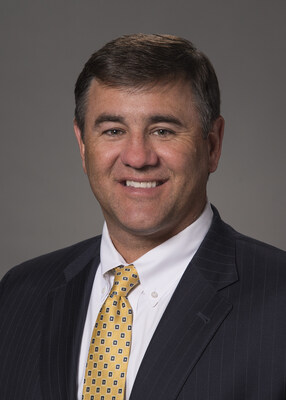
THOMASVILLE, Ga., Feb. 9, 2026 /PRNewswire/ -- Flowers Foods, Inc. (NYSE: FLO) has named David Roach chief DSD operations officer, a newly created role designed to strengthen execution and increase accountability across the company's direct‑store‑delivery (DSD) operations.

Roach has full profit-and-loss responsibility for Flowers' DSD business, overseeing sales performance, operational efficiency, and cross‑functional alignment across the full value chain. He reports to Heeth Varnedoe, president and chief operating officer.

"This new role sharpens ownership of our DSD sales performance and enables greater visibility and influence to deliver strong results aligned with company goals," said Varnedoe. "David's leadership and deep understanding of our DSD model positions us to improve execution, enhance profitability, and consistently deliver value to stakeholders."

Roach has more than 30 years of experience with Flowers. He most recently served as chief strategic projects officer, leading initiatives to advance the company's long-term growth. Prior roles include president of cake operations and leadership posts spanning snacking/specialty, organics, and national and regional sales, as well as operations presidencies in Villa Rica, Ga., and Nashville, Tenn.

Roach's appointment reflects Flowers' focus on operating with greater speed and efficiency in an increasingly dynamic retail environment, where disciplined execution and enterprise visibility are critical to delivering sustained results.

As part of the organization's evolution, Flowers has also consolidated its end-to-end cake business into a newly formed division led by Dan Scott, senior vice president, cake. In this new role, Scott reports to Roach and is responsible for accelerating performance and driving profitable growth across the cake portfolio.

Scott, who joined Flowers in 1999, brings extensive DSD sales and bakery experience through multiple leadership positions across the company's traditional, specialty, and cake businesses. He also played a critical role in Flowers' recent digital transformation initiatives.

"Dan's extensive experience in DSD sales and proven ability to lead through transformational change will be invaluable as we seek continued improvement and growth in our cake business," stated Varnedoe. "Together, these leadership and structural changes strengthen our DSD model and position Flowers for long‑term success."

About Flowers Foods

Headquartered in Thomasville, Ga., Flowers Foods, Inc. (NYSE: FLO) is one of the largest producers of packaged bakery foods in the United States with 2024 net sales of $5.1 billion. Flowers operates bakeries across the country that produce a wide range of bakery products. Among the company's top brands are Nature's Own, Dave's Killer Bread, Canyon Bakehouse, Simple Mills, Wonder, and Tastykake. Learn more at www.flowersfoods.com.

FLO-CORP FLO-IR

Forward-Looking Statements

Statements contained in this press release and certain other written or oral statements made from time to time by Flowers Foods, Inc. (the "company", "Flowers Foods", "Flowers", "us", "we", or "our") and its representatives that are not historical facts are forward-looking statements as defined in the Private Securities Litigation Reform Act of 1995. Forward-looking statements relate to current expectations regarding our business and our future financial condition and results of operations and are often identified by the use of words and phrases such as "anticipate," "believe," "continue," "could," "estimate," "expect," "intend," "may," "plan," "predict," "project," "should," "will," "would," "is likely to," "is expected to" or "will continue," or the negative of these terms or other comparable terminology. These forward-looking statements are based upon assumptions we believe are reasonable. Forward-looking statements are based on current information and are subject to risks and uncertainties that could cause our actual results to differ materially from those projected. Certain factors that may cause actual results, performance, liquidity, and achievements to differ materially from those projected are discussed in our Annual Report on Form 10-K for the year ended December 28, 2024 (the "Form 10-K") and our Quarterly Reports on Form 10-Q filed with the Securities and Exchange Commission ("SEC") and may include, but are not limited to, (a) unexpected changes in any of the following: (1) general economic and business conditions; (2) the competitive setting in which we operate, including advertising or promotional strategies by us or our competitors, as well as changes in consumer demand; (3) interest rates and other terms available to us on our borrowings; (4) supply chain conditions and any related impact on energy and raw materials costs and availability and hedging counter-party risks; (5) relationships with or increased costs related to our employees and third-party service providers; (6) laws and regulations (including environmental and health-related issues and the impacts of tariffs, including retaliatory tariffs); and (7) accounting standards or tax rates in the markets in which we operate,  (b) the loss or financial instability of any significant customer(s), including as a result of product recalls or safety concerns related to our products, (c) changes in consumer behavior, trends and preferences, including health and whole grain trends and consumer buying habits, the movement toward less expensive store branded products, and the continued reduction of purchases in the fresh packaged bread category, (d) the level of success we achieve in developing and introducing new products and entering new markets, (e) our ability to implement new technology and customer requirements as required, (f) our ability to operate existing, and any new, manufacturing lines according to schedule, (g) our ability to implement and achieve our corporate responsibility goals in accordance with regulatory requirements and the expectations of our stakeholders, suppliers, and customers; (h) our ability to execute our business strategies which may involve, among other things, (1) the ability to realize the intended benefits of completed, planned or contemplated acquisitions, dispositions or joint ventures, such as the acquisition of Simple Mills, (2) the deployment of new systems (e.g., our enterprise resource planning ("ERP") system), distribution channels and technology, and (3) an enhanced organizational structure (e.g., our sales and supply chain reorganization), (i) consolidation within the baking industry and related industries, (j) changes in pricing, customer and consumer reaction to pricing actions (including decreased volumes), and the pricing environment among competitors within the industry, (k) our ability to adjust pricing to offset, or partially offset, inflationary pressure or tariffs (including retaliatory tariffs) on the cost of our products, including ingredient and packaging costs; (l) disruptions in our direct-store-delivery distribution model, including litigation or an adverse ruling by a court or regulatory or governmental body that could affect the independent contractor classifications of the independent distributor partners ("IDPs"), and changes to our direct-store-delivery distribution model in California, (m) increasing legal complexity and legal proceedings that we are or may become subject to, (n) labor shortages and turnover or increases in employee and employee-related costs, (o) the credit, business, and legal risks associated with IDPs and customers, which operate in the highly competitive retail food and foodservice industries, (p) any business disruptions due to political instability, pandemics, armed hostilities, incidents of terrorism, natural disasters, labor strikes or work stoppages, technological breakdowns, product contamination, product recalls or safety concerns related to our products, or the responses to or repercussions from any of these or similar events or conditions and our ability to insure against such events, (q) the failure of our information technology systems to perform adequately, including any interruptions, intrusions, cyber-attacks or security breaches of such systems or risks associated with the implementation of the upgrade of our ERP system; and (r) the potential impact of climate change on the company, including physical and transition risks, our availability or restriction of resources, higher regulatory and compliance costs, reputational risks, and our availability of capital on attractive terms. The foregoing list of important factors does not include all such factors, nor does it necessarily present them in order of importance. In addition, you should consult other disclosures made by the company (such as in our other filings with the SEC or in company press releases) for other factors that may cause actual results to differ materially from those projected by the company. Refer to Part I, Item 1A., Risk Factors, of our Form 10-K, Part II, Item 1A., Risk Factors, of the Form 10-Q for the quarter ended October 4, 2025 and subsequent filings with the SEC for additional information regarding factors that could affect the company's results of operations, financial condition and liquidity. We caution you not to place undue reliance on forward-looking statements, as they speak only as of the date made and are inherently uncertain. The company undertakes no obligation to publicly revise or update such statements, except as required by law. You are advised, however, to consult any further public disclosures by the company (such as in our filings with the SEC or in company press releases) on related subjects.

Cision View original content to download multimedia:https://www.prnewswire.com/news-releases/flowers-foods-names-david-roach-chief-dsd-operations-officer-302682624.html

SOURCE Flowers Foods, Inc.

FAQ

What does David Roach's appointment as chief DSD operations officer mean for Flowers Foods (FLO)?

Roach will have full profit-and-loss responsibility for DSD, centralizing accountability for sales and operations. According to the company, this role is intended to sharpen execution, improve operational efficiency, and increase visibility across the DSD value chain to drive consistent results.

How does the new cake division structure affect Flowers Foods' reporting and leadership (FLO)?

The company consolidated its end-to-end cake business under Dan Scott, who now reports to Roach. According to the company, the change is meant to accelerate cake performance and drive profitable growth by aligning sales, operations, and transformation efforts.

Who does David Roach report to after the February 9, 2026 leadership change at Flowers Foods (FLO)?

David Roach reports to Heeth Varnedoe, president and chief operating officer. According to the company, this reporting line is designed to increase cross-functional alignment and executive oversight of the DSD sales and operations agenda.

What experience does David Roach bring to his new role at Flowers Foods (FLO)?

Roach brings more than 30 years with Flowers, including roles as chief strategic projects officer and president of cake operations. According to the company, his background spans DSD sales, bakery operations, and regional operations leadership.

How large is Flowers Foods' business as referenced in the Feb. 9, 2026 announcement (FLO)?

Flowers Foods reported 2024 net sales of $5.1 billion, indicating scale in packaged bakery products. According to the company, it operates bakeries nationwide and markets brands like Nature's Own and Dave's Killer Bread.
Flowers Foods Inc

NYSE:FLO

FLO Rankings

FLO Latest News

FLO Latest SEC Filings

FLO Stock Data

2.53B
194.02M
7.63%
85.91%
8.95%
Packaged Foods
Food and Kindred Products
Link
United States
THOMASVILLE