
Karma Automotive Announces Bilateral Collaboration with Intel Automotive to Blueprint the Future of the Automobile
Karma Automotive, California's ultra-luxury automaker, has announced a bilateral collaboration with Intel Automotive to co-develop Software Defined Vehicle Architecture (SDVA).
Sentiment and the balance of points
Rhea-AI Sentiment reads the wording of the document, how positive or negative its language is on a 1 to 5 scale. The balance of points shown with the takes weighs what the document actually discloses, so the two can disagree, for example when a trial that missed its main goal is described in upbeat language.
Rhea-AI Summary
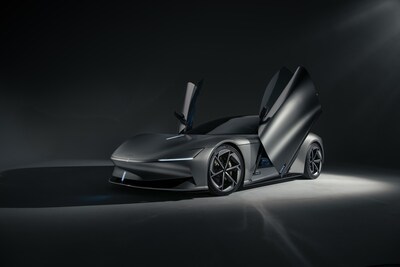
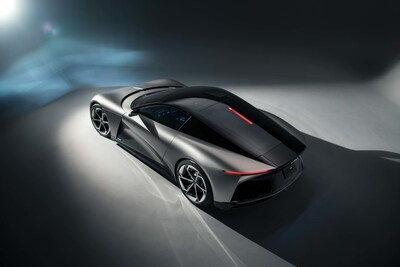
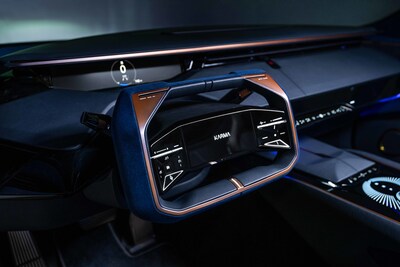
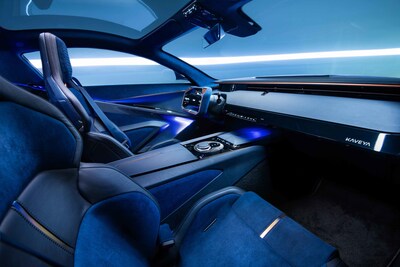
Karma Automotive, California's ultra-luxury automaker, has announced a bilateral collaboration with Intel Automotive to co-develop Software Defined Vehicle Architecture (SDVA). This partnership aims to pioneer new technologies for the automotive industry, focusing on reducing costs and increasing efficiency. The collaboration will underpin Karma's upcoming vehicles, including the Karma Kaveya super coupe, set to launch in 2026.
SDVA represents a significant shift from traditional vehicle architecture, moving towards a centralized computing system that allows for flexible workload management and improved energy efficiency. This approach is expected to revolutionize the automotive industry, similar to how the IT industry transitioned to high-performance computing systems.
Positive
- Collaboration with Intel Automotive to develop advanced SDVA technology
- Potential to reduce costs and increase efficiency in vehicle manufacturing
- Karma Kaveya super coupe with up to 1,000 horsepower planned for 2026 launch
- Opportunity to provide B2B SDVA solutions to other OEMs and Tier 1 suppliers
Negative
- High price point of $300,000 USD for the Karma Kaveya may limit market reach
- Significant technological shift may pose implementation challenges
Details
News Market Reaction – INTC
The recorded move for INTC in the trading session of this news was -2.69%.
Data tracked by StockTitan Argus. Session date unavailable.
AI-generated analysis. How Rhea-AI works. Not financial advice.




Through the Collaborative Development of Software-Defined Vehicle Architecture, the Companies will Pioneer and Prove New Technologies to Reduce Cost and Heighten Efficiency to the Benefit of the Entire Automotive Industry
"Karma Automotive, together with Intel Automotive, will realize SDVA's full potential to create innovative, intelligent and beautiful Karma automobiles which, in addition to delivering unparalleled driving dynamics, will be highly efficient and offer an exceptional ownership experience," says Marques McCammon, President, Karma Automotive. "For Tier 1's and OEMs (Original Equipment Manufacturers) not quite ready to take the leap from the old way of doing things to the new, Karma Automotive will play as an ally, helping them make that transition with business-to-business SDVA solutions in the same way we do today with Karma Connect, our proprietary Vehicle Data Management and Over the Air services platform, which presently provides services to the world's second largest OEM."
"As the leader of Intel Automotive, I come by my love of cars honestly, my family having owned everything from a Renault Le Car to a Porsche and an MBG. At Intel Automotive we can see that the industry is facing a perfect storm of unprecedented change. Intel has assisted other industries with such transformations in the past and we're honored to do the same in Automotive," says Jack Weast, Intel Fellow, Vice President, General Manager, Intel Automotive. "Together, through this collaboration with Karma Automotive, we're in a position to prepare the industry for the leap forward to SDVA without leaving anyone behind."
McCammon and Weast first aligned on the vision for the future of the automobile during their work as colleagues over a decade ago at Wind River, formerly a division of Intel.
The Karma Kaveya super coupe, with up to 1,000 horsepower, optional all-wheel drive and a sub-three second 0-60, will be priced from approximately
Software Defined Vehicle Architecture (SDVA): Technical Explanation & Background
Since the invention of the automobile in 1888, its architecture has remained relatively unchanged: powertrains have become more powerful and efficient, and vehicle safety has greatly improved, but the format has stayed largely the same. With the addition of each new feature from fuel injection and power windows to air-conditioning and Advanced Driver Assistance Systems (ADAS), today's vehicle typically has over 100 Electric Control Units (ECUs), each delivering a single function, requiring over a mile of copper cabling to connect. Layer upon layer has been piled atop a foundation which can no longer support the future of the automobile. The solution can be found in the Information Technology (IT) industry, which long ago moved away from single function devices to high-performance computing systems where multiple workloads run on a single, centralized system. Similarly, SDVA looks at the vehicle systems as a whole, and allows for the seamless movement of workloads between software-defined central "compute" systems and software-defined zonal "compute" sub-systems, ensuring maximum flexibility, optimal cost and performance with significant energy efficiency benefits.
As an example, many EVs – even when switched "off" – support a feature that still monitors the external cameras for security threats or to recognize the driver as they approach. Typically, this feature is supported on the vehicle's in-cabin "compute" subsystem, which due to its high-power consumption, puts unnecessary drain on the battery even when the vehicle is off. This workload doesn't have to stay resident on the software-defined central "compute" system. Using Intel's software-defined zonal controllers to handle camera streams, data center application orchestration concepts can be embraced and migrate the workload to a lower-power device (in this case the zonal controller) and wake the central compute system only when needed. It would save energy, improve efficiency and reduce the total number of electronic control units (ECUs) in the vehicle by consolidating workloads dynamically onto a software-defined zonal controller.
About Karma Automotive
Karma Automotive is
About Intel
Intel (Nasdaq: INTC) is an industry leader, creating world-changing technology that enables global progress and enriches lives. Inspired by Moore's Law, we continuously work to advance the design and manufacturing of semiconductors to help address our customers' greatest challenges. By embedding intelligence in the cloud, network, edge and every kind of computing device, we unleash the potential of data to transform business and society for the better. To learn more about Intel's innovations, go to newsroom.intel.com and intel.com.
© Intel Corporation. Intel, the Intel logo, and other Intel marks are trademarks of Intel Corporation or its subsidiaries. Other names and brands may be claimed as the property of others.
Media Contact:
Joe Richardson, (917) 716-6617
Joe@BeautifulNoisePR.com
 View original content to download multimedia:https://www.prnewswire.com/news-releases/karma-automotive-announces-bilateral-collaboration-with-intel-automotive-to-blueprint-the-future-of-the-automobile-302222156.html
SOURCE Karma Automotive
FAQ
AI-generated questions and answers. How Rhea-AI works. Not financial advice.