
STOCK TITAN

Fleet Launches Mythos-ready Autonomous Endpoint Management

Rhea-AI Impact
(Neutral)
Rhea-AI Sentiment
(Neutral)
Tags

Fleet announced Mythos-ready autonomous endpoint management on May 14, 2026, aiming to shrink patch cycles from 55–94 days to under two weeks, often hours. The platform delivers continuous patching, hourly policy checks, and detailed vulnerability exposure reporting across major operating systems for security-focused enterprises including Fastly (NYSE:FSLY).

Loading...
Loading translation...

AI-generated analysis. Not financial advice.

Positive

  • None.

Negative

  • None.

News Market Reaction – FSLY

-3.44%
23 alerts
-3.44% News Effect
-3.1% Trough in 12 min
-$98M Valuation Impact
$2.75B Market Cap
0.1x Rel. Volume

On the day this news was published, FSLY declined 3.44%, reflecting a moderate negative market reaction. Argus tracked a trough of -3.1% from its starting point during tracking. Our momentum scanner triggered 23 alerts that day, indicating elevated trading interest and price volatility. This price movement removed approximately $98M from the company's valuation, bringing the market cap to $2.75B at that time.

Data tracked by StockTitan Argus on the day of publication.

Key Figures

Legacy patch cycle: 55–94 days Fleet patch window: Under two weeks Exploit acceleration: 100 times faster +5 more
8 metrics
Legacy patch cycle 55–94 days Typical enterprise patch cycle duration
Fleet patch window Under two weeks Targeted vulnerability remediation time with autonomous endpoint management
Exploit acceleration 100 times faster Increase in vulnerability exploitation speed since three years ago
AEM patch cycle 6–13 days Gartner 2025 estimate for AEM-enabled tools
Cycle time reduction 87% Gartner-stated reduction in patch cycle time with AEM
AEM adoption forecast More than 50% Organizations predicted to adopt AEM by 2029
Exposure lookback 30 days Reporting window for exposure to critical vulnerabilities
Policy cadence Every hour Frequency of global compliance and patch policies

Market Reality Check

Price: $17.00 Vol: Volume 6,956,195 vs 20-da...
low vol
$17.00 Last Close
Volume Volume 6,956,195 vs 20-day average 11,844,196 (relative volume 0.59x). low
Technical Price $18.31 trades above 200-day MA of $13.75, 47.42% below 52-week high and 191.1% above 52-week low.

Peers on Argus

Fastly fell 3.78% while key peer BLND appeared in momentum scanners, up 4.08%. O...
1 Up

Fastly fell 3.78% while key peer BLND appeared in momentum scanners, up 4.08%. Other application software peers showed mixed, smaller moves, pointing to stock-specific factors over a broad sector rotation.

Historical Context

5 past events · Latest: May 06 (Positive)
Pattern 5 events
Date Event Sentiment Move Catalyst
May 06 Record Q1 earnings Positive -38.2% Record Q1 2026 revenue, margin expansion, and raised full-year guidance.
Apr 09 Earnings date announcement Neutral -21.7% Scheduled timing and call details for upcoming Q1 2026 earnings release.
Apr 09 Anti-piracy partnership Positive -10.1% Joint AI-powered initiative with LALIGA to combat live-streaming piracy.
Mar 31 Executive leadership change Positive +13.9% Appointment of new CMO to drive growth and market leadership efforts.
Mar 24 Industry recognition Positive -1.9% Named a Leader in Forrester Wave for edge development platforms.
Pattern Detected

Recent history shows frequent negative reactions to fundamentally positive or neutral news, including record earnings and strategic partnerships, with only the CMO appointment aligning positively. This suggests a pattern where strong operational updates have coincided with sharp selloffs, while some leadership news has been rewarded.

Recent Company History

Over the last few months, Fastly reported record Q1 2026 results on May 6 with strong growth and raised guidance, yet the stock fell 38.23% the next day. An earlier earnings date announcement on April 9 also saw a 21.69% decline. Strategic news, including an anti‑piracy partnership with LALIGA on April 9 and being named a Leader in edge development on March 24, drew modest to negative reactions, while the CMO appointment on March 31 led to a 13.87% gain.

Market Pulse Summary

This announcement highlights Fleet’s autonomous endpoint management as a response to rapidly acceler...
Analysis

This announcement highlights Fleet’s autonomous endpoint management as a response to rapidly accelerating AI-driven exploits, citing reductions of legacy 55–94 day patch cycles to under two weeks. For Fastly, it underscores customer focus on security, automation, and infrastructure-as-code tooling that intersect with its edge and security positioning. Investors may watch how such customers’ priorities, alongside Fastly’s recent record Q1 results and evolving governance, influence security-related demand and partnerships.

Key Terms

autonomous endpoint management, data lake, infrastructure as code, apis, +1 more
5 terms
autonomous endpoint management technical
"According to the 2025 Gartner® Innovation Insight: Autonomous Endpoint Management (AEM)"
Autonomous endpoint management is software that automatically monitors, updates, and secures devices that connect to a business network—such as laptops, phones, and Internet-of-Things gadgets—without constant human intervention. For investors, it matters because it cuts IT labor and downtime, lowers breach and compliance risk, and scales more cheaply as a company grows, similar to a self-driving maintenance crew that keeps a fleet running smoothly with fewer mechanics on hand.
data lake technical
"augments Fleet's existing data lake integrations that allow infinite, more in-depth"
A data lake is a large, centralized storage system that holds raw digital information in its original form — documents, spreadsheets, sensor logs, images, and more — rather than forcing everything into a neat structure first. For investors, a well-run data lake is like a company’s research library: it can speed product development, improve forecasting and risk detection, and support better decisions, but it also requires disciplined management to avoid becoming disorganized and costly.
infrastructure as code technical
"requires first-class support for modern standards like infrastructure as code, APIs, MCP"
A way of managing company IT systems—servers, networks, and cloud resources—by writing and running code instead of configuring things by hand. Like using a recipe to recreate a restaurant kitchen exactly the same every time, it makes setups repeatable, faster, and less error-prone. For investors, this reduces operational risk and costs, speeds product rollouts, and supports reliable scaling and auditing, which can protect margins and growth plans.
apis technical
"requires first-class support for modern standards like infrastructure as code, APIs, MCP"
APIs are sets of rules that let different software systems talk to each other, like standardized doorways that let apps, data services and websites exchange information without needing to be rebuilt each time. For investors, APIs matter because they speed product development, enable digital partnerships and data feeds, create new revenue or cost savings, and introduce operational or security dependencies that can affect growth and risk.
gitops-mode technical
"Fleet has prioritized change control and 'GitOps-mode' from the very beginning"
GitOps mode is an operating method where the desired state of software and infrastructure is stored in a version-controlled repository (like a recipe book) and automated tools apply those changes to live systems. For investors, it matters because this approach makes deployments faster, more consistent and easier to audit, reducing operational risk and allowing companies to scale technology changes with fewer mistakes and lower ongoing costs.

AI-generated analysis. Not financial advice.

Fighting AI with AI, top public companies and the Forbes Cloud 100 choose Fleet to prepare employee devices for new ways of working and bot attacks
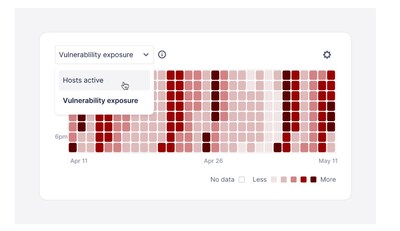
SAN FRANCISCO, May 14, 2026 /PRNewswire/ -- A vulnerability discovered on Friday can be weaponized by Monday, yet the average enterprise patch cycle still takes 55 to 94 days. To address this challenge, Fleet today announced autonomous endpoint management that cuts that window to under two weeks - and in many cases, hours - through continuous patching and down-to-the-hour vulnerability exposure reporting across every major operating system.

Validating this approach, security-conscious companies including Fastly (NYSE: FSLY), Uber (NYSE: UBER), Cursor, Reddit (NYSE: RDDT), and Stripe have chosen Fleet to keep employee devices current and resilient as AI-driven threats accelerate.

"Adopting Fleet has fundamentally shifted how we manage devices, turning it into a streamlined discipline that mirrors our DevOps culture. We've unlocked total, unified visibility across thousands of employee devices, and we get real-time confidence in the health and compliance of our global infrastructure every single day," said Dan Jackson, Senior Manager, Systems Engineering at Fastly. "We operate entirely free of the traditional maintenance and operational overhead that used to slow us down, resulting in a highly secure, efficient, and modern IT environment."

Anthropic Mythos, expected to be publicly released later this year, represents a step-change in AI capability. Security researchers predict that both Mythos and OpenAI's GPT 5.5 will dramatically lower the barrier to automated exploit development. Meanwhile, vulnerabilities are already being exploited 100 times faster on average in 2026 than three years ago. The window between disclosure and weaponization is no longer measured in weeks. It's measured in hours.

According to the 2025 Gartner® Innovation Insight: Autonomous Endpoint Management (AEM), "patching cycles that currently take 55 to 94 days can be reduced to 6 to 13 days with AEM-enabled tools - an 87% reduction in cycle time." "Gartner also predicts that by 2029, more than 50% of organizations will adopt AEM capabilities, within advanced endpoint management and DEX tools to significantly reduce human effort, up from nearly zero in 2024." Gartner describes, "autonomous endpoint management as the most significant advancement in endpoint management in over a decade."1

Fleet delivers on that vision today.

By monitoring when a new software update becomes available and when new vulnerabilities are disclosed, Fleet can now automatically mitigate vulnerabilities and keep software up to date, with no ticket or manual intervention required. New capabilities, for every OS, include:

  • Out-of-the-box reporting on which devices have (or had) out-of-date software and the length of time they were exposed to risk from critical vulnerabilities over the last 30 days. This provides an easy way to gather metrics like "Mean Time to Patch" (MTTP) and augments Fleet's existing data lake integrations that allow infinite, more in-depth historical analysis.
  • Upgraded policy engine that compares installed software, configurations, and system metrics with known vulnerability databases and the latest available releases of software. When a device falls out of compliance, Fleet automatically updates the software or performs a more advanced mitigation such as uninstalling the old version. Policies run every hour (or at custom defined intervals) globally, shrinking exposure windows to hours.
  • Highly customizable auto-patch policies designed for IT teams with complex environments, yet who must also roll out updates faster than ever, but with surgical precision to avoid crashing apps and interrupting workflows. Like most of Fleet's capabilities, this is not "all or nothing", and supports ring deployments, complex scoping, exclusions, and variations for particular roles, subsidiaries, and global geographies.

Fleet's customers who have begun taking advantage of the new capabilities are pleased: "Patch policies are already transforming how we operate," said a principal endpoint engineer at a leading consumer electronics company that is currently migrating from a legacy solution. "Apps we'd skip patching due to maintenance overhead are now straightforward to configure, typically taking just five minutes. The ongoing maintenance burden is minimal, and I can set it up to update software automatically while still customizing every aspect of the end user experience for the person on the other end of the device."

The industry is recognizing the need to be resourceful and swift to keep up with the AI evolution. For instance, Salesforce CEO Marc Benioff recently noted the company's strategic shift toward going headless and API-first. His stance adds to the wave of companies racing to position their products as programmatic infrastructure with first-class support for AI, which requires first-class support for modern standards like infrastructure as code, APIs, MCP, and CLIs, alongside traditional user interfaces.

"Fleet has prioritized change control and 'GitOps-mode' from the very beginning, because we knew how important it is for humans to review each other's work and prevent mistakes," said Mike McNeil, cofounder and CEO of Fleet Device Management. "Now that auto-patching is becoming inevitable for every organization, auditability, undo-ability, and special exceptions are even more important, especially for large enterprises where you're managing tens of thousands of devices. You need humans in the loop to prevent costly mistakes and outages, and Fleet's implementation of autonomous endpoint management provides that middle ground."

About Fleet (fleetdm.com):
Fleet is the open device management and vulnerability management platform for Macs, PCs, iPhones, iPads, Android, Chromebooks, desktop Linux, and cloud infrastructure. Organizations in 90 countries use Fleet to manage millions of devices at scale, enhance security, and stay compliant.  The company's mission is to bring transparency, efficiency, and control to the world of computing devices through its open and extensible platform.  Learn more at fleetdm.com.

For media inquiries, please contact:
Alyssa Pallotti for Fleet
alyssa@apt-pr.com
+447397686566

1 Gartner, Innovation Insight: Autonomous Endpoint Management, Tom Cipolla, Dan Wilson, 15 January 2025.
GARTNER is a trademark of Gartner, Inc. and/or its affiliates.

Cision View original content to download multimedia:https://www.prnewswire.com/news-releases/fleet-launches-mythos-ready-autonomous-endpoint-management-302771551.html

SOURCE Fleet Device Management

FAQ

What is Fleet's Mythos-ready autonomous endpoint management announced on May 14, 2026 for Fastly (NYSE:FSLY) and others?

Fleet's Mythos-ready autonomous endpoint management is a system that automates software patching and vulnerability mitigation across major operating systems. According to Fleet, it delivers continuous updates, hourly compliance checks, and detailed exposure reporting to help companies like Fastly keep employee devices current against fast-moving AI-driven threats.

How does Fleet's autonomous endpoint management reduce patch cycles compared with traditional methods for enterprises like Fastly (FSLY)?

Fleet reports that its autonomous endpoint management can cut patch cycles to under two weeks, and often hours, versus traditional 55–94 day averages. According to Fleet, continuous patching, hourly policy enforcement, and automated remediation shrink vulnerability exposure windows across large device fleets.

What new reporting and policy features did Fleet introduce with its autonomous endpoint management offering in 2026?

Fleet introduced out-of-the-box reporting on devices with out-of-date software and their exposure duration over 30 days. According to Fleet, upgraded hourly policies compare installed software with vulnerability databases and can auto-update, uninstall, or otherwise mitigate issues across complex, globally scoped environments.

How does Fleet's autonomous endpoint management address AI-driven exploit development such as Anthropic Mythos and GPT 5.5?

Fleet positions its autonomous endpoint management to counter faster exploit development linked to tools like Anthropic Mythos and GPT 5.5. According to Fleet, shrinking patch times to hours and automating mitigation helps organizations respond as vulnerabilities are weaponized far more quickly than in prior years.

What customization options do IT teams get with Fleet's auto-patch policies when managing devices at companies like Fastly (NYSE:FSLY)?

Fleet offers highly customizable auto-patch policies, including ring deployments, complex scoping, exclusions, and role-based or geographic variations. According to Fleet, these options let IT teams roll out updates quickly while minimizing app crashes, workflow disruption, and maintenance overhead across thousands of managed endpoints.

How does Fleet integrate change control and 'GitOps-mode' into its autonomous endpoint management platform?

Fleet states it has prioritized change control and 'GitOps-mode' from the start, enabling human review and rollback of configuration changes. According to Fleet, this supports auditability, undo-ability, and special exceptions, keeping humans in the loop even as auto-patching becomes standard in large enterprises.
