STOCK TITAN

PepsiCo and TalusAg Announce Low-carbon Ammonia Attribute Agreement to Help Accelerate Fertilizer Decarbonization

Rhea-AI Impact
(Moderate)
Rhea-AI Sentiment
(Neutral)
Tags

PepsiCo (NASDAQ: PEP) announced a collaboration with TalusAg to purchase low-carbon ammonia environmental attributes covering approximately 30,000 metric tons, with an option for an additional 41,000 metric tons. The deals span Europe, Sub‑Saharan Africa, Asia Pacific and global teams, and extend toward the U.S. and a proposed Blue Earth, Minnesota project. S3 Markets will issue and manage tokenized Environmental Attribute Certificates from Talus' Boone, Iowa project to support a book-and-claim model while physical low-carbon fertilizer supply and logistics scale.

Loading...
Loading translation...

AI-generated analysis. Not financial advice.

Positive

  • 30,000 metric tons initial low-carbon ammonia environmental attributes contracted
  • Option to purchase an additional 41,000 metric tons of attributes
  • First executed low-carbon ammonia attribute transactions for PepsiCo
  • Use of tokenized Environmental Attribute Certificates via S3 Markets for auditable lifecycle management
  • Geographic scope across Europe, Sub‑Saharan Africa, Asia Pacific and intent to extend to the U.S.

Negative

  • Additional 41,000 metric ton purchase is optional and not guaranteed
  • Reliance on a book-and-claim model while physical low-carbon fertilizer supply and logistics still develop
  • Material emissions reductions depend on verified EAC issuance and retirement processes

News Market Reaction – PEP

+0.29%
1 alert
+0.29% News Effect

On the day this news was published, PEP gained 0.29%, reflecting a mild positive market reaction.

Data tracked by StockTitan Argus on the day of publication.

Key Figures

Initial low-carbon ammonia volume: 30,000 metric tons Optional additional ammonia: 41,000 metric tons
2 metrics
Initial low-carbon ammonia volume 30,000 metric tons Initial agreements across Europe, Sub Saharan Africa, Asia Pacific, and global teams
Optional additional ammonia 41,000 metric tons Option to purchase additional low-carbon ammonia attributes

Market Reality Check

Price: $141.92 Vol: Volume 5,310,146 vs 20-da...
normal vol
$141.92 Last Close
Volume Volume 5,310,146 vs 20-day average 5,888,108, indicating slightly lighter trading. normal
Technical Shares at $154.59, trading above 200-day MA of $150.01 and about 9.85% below the 52-week high.

Peers on Argus

PEP was down 1.79% while key beverage peers were mixed: MNST -1.2%, CCEP -1.37%,...
1 Up

PEP was down 1.79% while key beverage peers were mixed: MNST -1.2%, CCEP -1.37%, KDP -0.35%, but KO +0.17% and COKE +2.77%. This points to a stock-specific move rather than a broad sector reaction to the sustainability news.

Historical Context

5 past events · Latest: Apr 28 (Positive)
Pattern 5 events
Date Event Sentiment Move Catalyst
Apr 28 Renewable energy deal Positive +1.4% 10-year VPPA under pep+ REnew to reduce Scope 3 emissions.
Apr 23 Brand campaign Positive +1.2% Global Gatorade football campaign reviving 'Is It In You?' platform.
Apr 22 AI partnership Positive -0.8% Multi-year Google Cloud collaboration to deepen AI capabilities.
Apr 22 Annual meeting notice Positive -0.8% Announcement of virtual annual shareholders meeting webcast details.
Apr 16 Product relaunch Positive +2.3% Major evolution of Gatorade lineup with new hydration products.
Pattern Detected

Recent brand and sustainability announcements have often seen modest positive reactions, but some neutral governance/meeting items have coincided with small declines.

Recent Company History

Over the past month, PepsiCo has issued several strategic updates. A 10-year VPPA to decarbonize European operations, multiple Gatorade brand and product initiatives, and a multi‑year AI collaboration with Google Cloud all underscored its “PepsiCo Positive” and digital agendas. Shareholder and governance communications around the May 6, 2026 annual meeting also featured. Today’s low‑carbon ammonia agreement with TalusAg continues the theme of value‑chain decarbonization and supply‑chain resilience.

Market Pulse Summary

This announcement outlines PepsiCo’s collaboration with TalusAg to secure about 30,000 metric tons o...
Analysis

This announcement outlines PepsiCo’s collaboration with TalusAg to secure about 30,000 metric tons of low‑carbon ammonia attributes, with an option for another 41,000, using a book‑and‑claim EAC model. It extends earlier value‑chain decarbonization efforts into fertilizer, a hard‑to‑abate area. In context of recent renewable energy and AI supply‑chain initiatives, investors may watch for quantified emission reductions, cost impacts, and how these programs influence long‑term resilience and brand positioning.

Key Terms

low-carbon ammonia, environmental attributes, book-and-claim model, environmental attribute certificates (EAC), +1 more
5 terms
low-carbon ammonia technical
"advance fertilizer decarbonization ... through low-carbon ammonia environmental attributes"
Low-carbon ammonia is the common chemical ammonia made using processes that emit far less greenhouse gas than conventional methods, typically by using low-emission hydrogen sources or capturing emissions during production. It matters to investors because ammonia is widely used as fertilizer and an emerging energy carrier, so cleaner production can open new markets, reduce regulatory and carbon-cost risks, and require sizable upfront investment—making it a potentially fast-growing, capital-intensive opportunity or liability depending on demand and policy.
environmental attributes financial
"through low-carbon ammonia environmental attributes, marking PepsiCo's first executed"
Environmental attributes are the measurable features of a product, operation or asset that describe its impact on the natural environment—things like greenhouse gas emissions, energy and water use, waste generation, land use, and recyclability. For investors they act like an ingredients label for environmental risk and opportunity: they help gauge potential regulatory costs, operational savings, consumer demand and long-term value, so companies with stronger attributes may face lower risk and attract more capital.
book-and-claim model technical
"through a book-and-claim model, where the environmental attribute is tracked"
A book-and-claim model is a system where sustainability or quality attributes (like renewable energy or responsibly sourced materials) are tracked with digital certificates separate from the physical goods, so a company can buy a certificate to claim a green or ethical input without physically receiving that exact item. Investors care because it affects a company’s public sustainability claims, regulatory compliance, cost structure and reputational risk—similar to buying a warranty certificate for a product you don’t actually hold.
environmental attribute certificates (EAC) financial
"S3 Markets will provide the supporting Environmental Attribute Certificates (EAC)"
Environmental attribute certificates (EACs) are tradable documents that certify a specific, measurable environmental benefit—for example one megawatt-hour of renewable electricity generated or a quantified amount of emissions avoided. Investors care because EACs function like receipts or credits that companies use to meet regulatory requirements or voluntary sustainability targets, and they can create revenue or cost liabilities; changes in EAC supply, pricing or credibility can therefore affect the economics and valuation of energy, utility and clean-technology investments.
tokenized technical
"what the parties believe to be the world's first tokenized ammonia fertilizer EACs"
Tokenized means converting a real-world asset, like property, artwork, or stocks, into digital tokens stored on a computer network. This process makes it easier to buy, sell, or transfer small parts of the asset quickly and securely, much like dividing a property into many tiny pieces that can be traded individually. For investors, tokenization can increase access, liquidity, and flexibility in managing their investments.

AI-generated analysis. Not financial advice.

See more from StockTitan in Google Search and AI answers. Adds StockTitan as a preferred source · opens Google
Add on Google

PURCHASE, N.Y., May 5, 2026 /PRNewswire/ -- PepsiCo (NASDAQ: PEP) today announced a new collaboration with agriculture technology company, TalusAg, that aims to advance fertilizer decarbonization across global agricultural supply chains through low-carbon ammonia environmental attributes, marking PepsiCo's first executed transactions of this kind.

The initial agreements span PepsiCo's Europe, Sub Saharan Africa, Asia Pacific, and global teams, representing approximately 30,000 metric tons of low-carbon ammonia, with an option to purchase an additional 41,000 metric tons. The broader collaboration also extends to the U.S. and the proposed Blue Earth, Minnesota project.

Fertilizer production is one of the most emissions intensive and hard to abate components of global food systems, with much of the impact occurring upstream of direct supplier relationships. Through this collaboration, PepsiCo is complementing physical low carbon fertilizer pilots with market-based mechanisms that can deliver near term, auditable emissions reductions while preserving affordability for farmers.

"Decarbonizing fertilizer is important to advancing climate progress at scale, but it should be done in a way that works for farmers," said Margaret Henry, PepsiCo Vice President of Sustainable and Regenerative Agriculture said. "This agreement helps create a strong demand signal for low emissions ammonia while supporting both more stable input economics for growers and the long-term transition of the fertilizer market."

Talus' approach enables companies to purchase verified low-emissions ammonia environmental attributes through a book-and-claim model, where the environmental attribute is tracked separately from the physical fertilizer flow.

"This global collaboration is a prime example of how credible market-based mechanisms can help build supply chain reliability, lower fertilizer costs for local farmers and and accelerate investment in low emissions fertilizer production," Hiro Iwanaga CEO, TalusAg said. "With PepsiCo's leadership, we will work together to help derisk new capacity while supporting more resilient and sustainable food systems."

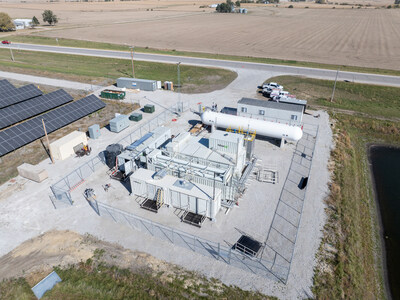
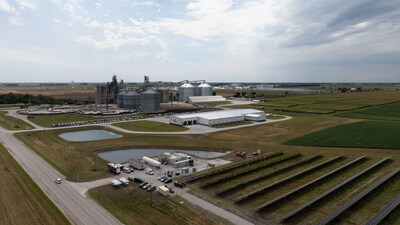
S3 Markets will provide the supporting Environmental Attribute Certificates (EAC) lifecycle management infrastructure for the issuance, tracking, and retirement of what the parties believe to be the world's first tokenized ammonia fertilizer EACs from Talus' Boone, Iowa project. This enables near-term action while physical low-carbon supply and logistics continue to develop.

"This collaboration helps demonstrate how trusted market infrastructure can support credible book-and-claim systems for low-carbon commodities," said Saman Baghestani, CEO of S3 Markets. "By enabling secure and auditable EAC lifecycle management, we can help innovative producers like TalusAg and forward-looking buyers like PepsiCo to participate with confidence as these markets develop."

In addition to reducing emissions, TalusAg's distributed production model helps strengthen the resilience of fertilizer supply chains by enabling local, on-site generation of ammonia closer to where it is used. By reducing reliance on long, centralized global supply chains that can be highly exposed, this approach helps mitigate geopolitical, logistics, and price volatility risks while improving access to reliable fertilizer supply in both developed and emerging markets. Localized production also lowers transportation emissions and costs, supporting more stable input economics for growers while enhancing food system resilience over the long term.

The collaboration also reflects continued joint advocacy for credible, low-cost environmental attribute markets to help accelerate fertilizer decarbonization globally.

"By supporting initiatives like Talus, PepsiCo aims to advance lower-carbon, locally produced fertilizer solutions that can help strengthen supply chain resilience and deliver climate benefits for agriculture," said Henry.

About PepsiCo
PepsiCo products are enjoyed by consumers more than one billion times a day in more than 200 countries and territories around the world. PepsiCo generated nearly $94 billion in net revenue in 2025, driven by a complementary beverage and convenient foods portfolio that includes Lay's, Doritos, Cheetos, Gatorade, Pepsi-Cola, Mountain Dew, Quaker, and SodaStream. PepsiCo's product portfolio includes a wide range of enjoyable foods and drinks, including many iconic brands that generate more than $1 billion each in estimated annual retail sales.

Guiding PepsiCo is our vision to Be the Global Leader in Beverages and Convenient Foods by Winning with pep+ (PepsiCo Positive). pep+ is our strategic end-to-end transformation that places sustainability at the center of our business strategy, seeking to drive growth and build a stronger, more resilient future for PepsiCo and the communities where we operate. For more information, visit www.pepsico.com, and follow on X (Twitter), Instagram, Facebook, and LinkedIn @PepsiCo.

About TalusAg
Founded in 2021, TalusAg is an agriculture technology and energy infrastructure company that develops a distributed network of green ammonia systems to locally produce this critical raw material in a more cost-competitive and reliable way across the globe. The company has pioneered the first commercial, modular, green ammonia system in North America and currently has production systems in the U.S., Kenya and Spain. For more information, please visit www.talusag.com.

About S3 Markets
S3 Markets builds market infrastructure for Environmental Attribute Certificates tied to low-carbon commodities. Its EAC lifecycle management system helps producers scale and enables buyers to address Scope 3 decarbonization opportunities across commodities such as ammonia, steel, cement, copper, and other industrial materials. For more information visit www.s3markets.com/.

Media Contact:

Rachel Kent
Rachel.Kent@pepsico.com


Cision View original content to download multimedia:https://www.prnewswire.com/news-releases/pepsico-and-talusag-announce-low-carbon-ammonia-attribute-agreement-to-help-accelerate-fertilizer-decarbonization-302762543.html

SOURCE PepsiCo, Inc.

FAQ

What did PepsiCo (PEP) announce about low-carbon ammonia on May 5, 2026?

PepsiCo announced a collaboration with TalusAg to acquire low-carbon ammonia attributes covering about 30,000 metric tons. According to the company, there is an option to buy an additional 41,000 metric tons and the scope spans multiple global regions.

How will PepsiCo (PEP) track and verify low-carbon ammonia attributes?

PepsiCo will use tokenized Environmental Attribute Certificates managed by S3 Markets for issuance, tracking, and retirement. According to the company, this provides auditable lifecycle management for book-and-claim environmental attributes.

Does the PepsiCo and TalusAg agreement include physical low-carbon fertilizer deliveries?

The agreement purchases environmental attributes rather than physical fertilizer flows via a book-and-claim model. According to the company, physical low-carbon supply and logistics will continue to develop alongside these market-based mechanisms.

Which regions does PepsiCo's low-carbon ammonia agreement cover for PEP stock investors?

The initial agreements cover PepsiCo's Europe, Sub‑Saharan Africa, Asia Pacific and global teams, with collaboration extending toward the U.S. and Blue Earth, Minnesota. According to the company, the program targets global agricultural supply chains.

What is the investor significance of PepsiCo (PEP) using environmental attributes for fertilizer decarbonization?

The approach creates a commercial demand signal for low-emissions ammonia and supports near-term auditable emissions claims. According to the company, this aims to help stabilize input economics for growers while enabling investment in low-carbon fertilizer production.