
More Than One-Third of Industrial Organizations See Cybersecurity Risk as a Top Obstacle to Growth, New Global Study Finds
Rockwell Automation’s new global survey highlights rising cyber incidents, strong cybersecurity investment and growing use of AI in industrial protection.
Rhea-AI Summary
Rockwell Automation (ROK) released a global study on Sept. 22, 2026 showing how industrial firms view cybersecurity risk amid growing connectivity, AI adoption and IT/OT convergence.
The survey of 1,560 decision makers across 17 major manufacturing countries found that more than one-third of industrial organizations regard cybersecurity risk as one of the biggest external obstacles to growth. While 46% of organizations experienced a cyber incident in the past year, 90% expressed confidence in their ability to prevent, contain or recover from such events. Cybersecurity is seen as a high-return investment, with 62% already investing in cybersecurity platforms and respondents ranking it as the second-highest ROI-generating technology. Looking ahead, 45% plan to apply AI and machine learning to cybersecurity in the next 12 months, and 37% believe securing IT/OT architectures will drive positive business outcomes over the next five years.
Positive
- None.
Negative
- None.
Key Figures
- Organizations experiencing cyber incident
- 46%
- Past year
- Confidence in cyber response
- 90%
- Ability to prevent, contain or recover from an incident
- Cybersecurity platform investment
- 62%
- Organizations already invested
- Planned AI cybersecurity use
- 45%
- Plan to apply AI and machine learning over the next 12 months
- IT/OT architecture outcomes
- 37%
- Expect securing IT/OT architecture to drive positive outcomes over five years
- Survey respondents
- 1,560 respondents
- Across 17 manufacturing countries
Historical Context
-
Rockwell joined Anthropic’s Project Glasswing to advance AI-enabled cyber defense.
24h Move is the share-price change in the day after each event; other market factors may also have contributed.
Key Terms
operational resilience technical
it/ot convergence technical
machine learning technical
attack surface technical
AI-generated analysis. How Rhea-AI works. Not financial advice.




Industrial companies are increasing cybersecurity investment as connected operations, AI adoption and IT/OT convergence expand operational risk
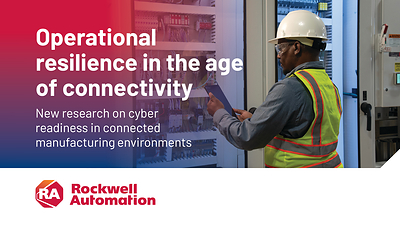
As organizations continue to connect information technology (IT) and operational technology (OT) systems, scale AI initiatives, and expand the use of operational data across the enterprise, they create new dependencies that can increase exposure to cyber-related risk. In fact, more than one-third of industrial organizations see cybersecurity risk as one of the biggest external obstacles to growth, underscoring the need to strengthen resilience as operations become more connected.
Key findings from the report include:
- Organizations remain confident despite rising incident exposure: While
46% of organizations experienced a cyber incident in the past year,90% say they are confident in their ability to prevent, contain or recover from one. - Cybersecurity delivers strong perceived ROI:
62% of organizations have already invested in cybersecurity platforms, and cybersecurity ranks as the second-highest ROI-generating technology investment reported by respondents. - Organizations are looking to AI as part of their cybersecurity response:
45% plan to apply AI and machine learning to cybersecurity initiatives over the next 12 months. - IT/OT convergence creates both risk and opportunity: IT and OT integration points rank as the second-most vulnerable to cyber incidents. At the same time,
37% say securing IT/OT architecture will drive positive business outcomes over the next five years.
"Industrial organizations understand that cybersecurity directly affects uptime, continuity, productivity and growth, but technology investments alone do not create operational resilience or confidence in an organization's security posture," said Rick Kaun, global director, cybersecurity services at Rockwell Automation. "True resilience is built when cybersecurity becomes an integral part of business strategy. Organizations that proactively manage risk and prepare for disruption are better positioned to protect operations, sustain production and gain a competitive advantage."
The full report, Operational Resilience in the Age of Connectivity, is available HERE and explores how industrial organizations are strengthening cybersecurity, managing IT/OT convergence and building more resilient operations in an increasingly connected environment.
Frequently Asked Questions:
What is operational resilience?
Operational resilience is an organization's ability to sustain safe, secure, and reliable industrial operations by proactively managing risk, limiting disruption and providing rapid recovery from incidents.
Why is IT/OT convergence increasing cybersecurity risk?
IT/OT convergence increases cybersecurity risk because it expands the attack surface, introduces new points of connectivity and allows threats that originate in IT environments to potentially impact industrial operations. As operational data, systems, users and third-party connections become more interconnected, a single cyber incident can have broader consequences across production, safety, quality and business continuity.
How are industrial organizations using AI for cybersecurity?
According to the research,
Methodology
This report analyzes feedback from 1,560 respondents across 17 of the top manufacturing countries representing roles from management through C-suite and was conducted by Sapio Research in association with Rockwell Automation. The survey sampled from a range of industries including Consumer Packaged Goods, Food & Beverage, Automotive, Semiconductor, Energy, Life Sciences, and more. With a balanced distribution of company sizes with revenues spanning
About Rockwell Automation
Rockwell Automation, Inc. (NYSE: ROK), is a global leader in industrial automation and digital transformation. We connect the imaginations of people with the potential of technology to expand what is humanly possible, making the world more productive and more sustainable. Headquartered in Milwaukee, Wisconsin, Rockwell Automation employs approximately 26,000 problem solvers dedicated to our customers in more than 100 countries as of fiscal year end 2025. To learn more about how we are bringing the Connected Enterprise® to life across industrial enterprises, visit www.rockwellautomation.com.

 View original content to download multimedia:https://www.prnewswire.com/news-releases/more-than-one-third-of-industrial-organizations-see-cybersecurity-risk-as-a-top-obstacle-to-growth-new-global-study-finds-302885138.html
SOURCE Rockwell Automation, Inc.
FAQ
AI-generated questions and answers. How Rhea-AI works. Not financial advice.
How does IT/OT convergence affect cybersecurity risk for industrial organizations?
IT/OT convergence increases cybersecurity risk by expanding the attack surface, adding new connectivity points and allowing threats originating in IT environments to impact industrial operations. As data, systems, users and third-party connections become more interconnected, a single cyber incident can cause broader consequences for production, safety, quality and business continuity.
How are industrial organizations planning to use AI in their cybersecurity strategies?
The research indicates that 45% of industrial organizations plan to apply AI and machine learning to cybersecurity over the next 12 months. The company describes these technologies as tools to enhance detection, monitoring and risk management capabilities within industrial environments.
What methodology underlies Rockwell Automation’s cybersecurity resilience report?
The report is based on feedback from 1,560 respondents across 17 leading manufacturing countries, covering roles from management to the C-suite. The survey, conducted by Sapio Research in association with Rockwell Automation, sampled companies with revenues from $100 million to more than $30 billion across sectors including consumer packaged goods, food and beverage, automotive, semiconductor, energy, life sciences and others.