
The Consumer Duty Compromise: New Broadridge Research Finds Legacy Regulation is Undermining Customer Understanding
Broadridge (NYSE: BR) research dated April 24, 2026 finds that legacy FCA disclosure rules can reduce customer comprehension and raise potential for harm.
Rhea-AI Summary
Broadridge (NYSE: BR) research dated April 24, 2026 finds that legacy FCA disclosure rules can reduce customer comprehension and raise potential for harm. In a 1,500‑person UK trial, a reimagined communication more than doubled comprehension and personalised numerical examples raised understanding from 32% to 59%.
The report urges regulatory reform, application of behavioural frameworks, and stronger communications governance to improve customer outcomes, trust, and operational efficiency.
Positive
- Comprehension more than doubled with reimagined communications
- Personalised numerical examples raised understanding from 32% to 59%
- 1,500-participant randomised controlled trial provides experimental evidence
- Modernising communications can improve customer experience, trust, and lower operational costs
Negative
- Only 15% of participants answered key comprehension questions correctly using legacy communications
- Over 80% of participants perceived communications as clear despite low actual comprehension
- Senior communications leaders report legacy rules, rigid templates, and governance complexity as barriers
Details
News Market Reaction – BR
In the Apr 24 session, BR declined 0.56%, reflecting a mild negative market reaction.
Data tracked by StockTitan Argus on the day of publication.
Key Figures
- Trial participants
- 1,500 customers
- Three-armed randomised controlled trial of UK savings customers
- Baseline comprehension
- 15%
- Participants correctly answering key questions using original communication
- Perceived clarity
- Over 80%
- Participants rating all versions as clear, fair and easy to understand
- Understanding with examples
- 32%
- Understanding consequences of inaction before personalised numerical examples
- Improved understanding
- 59%
- Understanding consequences of inaction with personalised numerical examples
Historical Context
-
Launch of Central Risk and Liquidity Optimization Solution for unified trading and risk.
-
Minority investment in HQLAx to support growth on Canton Network.
-
Tavira selects Broadridge OMS, connectivity and middle office solutions.
-
Matsui Securities adopts JASDECPS SaaS to transform securities lending operations.
-
Announcement of webcast and call to review Q3 FY26 results on Apr 30.
24h Move is the share-price change in the day after each event; other market factors may also have contributed.
Key Terms
financial conduct authority regulatory
behavioural science medical
randomised controlled trial medical
AI-generated analysis. How Rhea-AI works. Not financial advice.




Comprehension more than doubles with reimagined communications, Broadridge's behavioural science study shows
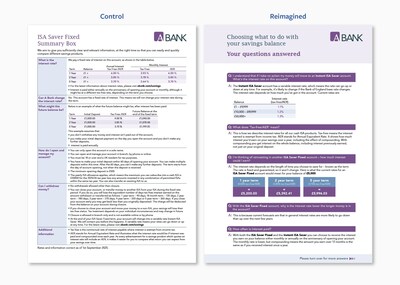
The study, The Consumer Duty Compromise, finds that legacy regulation for financial communications can significantly reduce customer comprehension. However, when those same communications are redesigned using behavioural science principles and personalised content, understanding more than doubles.
"This research makes clear: legacy rules do present barriers to customer comprehension," said Emily Gore, VP Business Development & Strategy at Broadridge. "If customers don't truly understand the financial implications of their actions, or inaction, we risk falling short of Consumer Duty's core purpose. By applying behavioural science, firms can dramatically improve understanding and drive better customer outcomes. Firms that move early, the report suggests, will not only meet regulatory expectations, they will gain competitive advantage through stronger customer relationships."
Comprehension doubled, potential harm reduced
In a three-armed randomised controlled trial of 1,500
- Only
15% of participants who read the original (control) communication were able to correctly answer key comprehension questions. - Despite this, over
80% of participants believed all versions were "clear, fair and easy to understand" - exposing a significant gap between perceived and actual comprehension. - A fully reimagined version, designed to leverage key behavioural principles, more than doubled comprehension
- When personalised numerical examples were included, understanding of the consequences of inaction increased from
32% to59% - the largest gain across the trial
The findings highlight a critical challenge for firms working to meet Consumer Duty requirements: customers consistently overestimate their understanding of financial communications.
A challenging context
Senior communications leaders across global and
Action on three fronts
The report recommends that firms:
- Continue to advocate for regulatory reform using evidence like this study
- Apply proven behavioural frameworks to maximise understanding within current rules
- Invest in a strategic approach to the governance and improvement of communications. One with the right roles, responsibilities and tools to manage consistent standards and track outcomes.
Beyond regulatory alignment, firms that modernise communications management can expect:
- Improved customer experience and trust
- Stronger brand metrics
- Faster speed to market
- Lower operational costs
A call for regulatory and industry action
The report suggests the following fixes:
- Continued FCA efforts to identify and remove conflicting legacy requirements
- Strategic approaches to the management and governance of customer communications to ensure consistent standards and support outcome tracking
- The establishment of specialist teams responsible for communications standards and equipping colleagues with the tools and support needed for clear, effective communications
About Broadridge
Broadridge Financial Solutions (NYSE: BR) is a global technology leader with trusted expertise and transformative technology, helping clients and the financial services industry operate, innovate, and grow. We power investing, governance, and communications for our clients – driving operational resiliency, elevating business performance, and transforming investor experiences.
Our technology and operations platforms process and generate over 7 billion communications annually and underpin the daily average trading of over
For more information about us, please visit www.broadridge.com
Broadridge Contacts:
Investors:
broadridgeir@broadridge.com
Media:
Gregg.Rosenberg@broadridge.com

 View original content to download multimedia:https://www.prnewswire.com/news-releases/the-consumer-duty-compromise-new-broadridge-research-finds-legacy-regulation-is-undermining-customer-understanding-302752401.html
SOURCE Broadridge Financial Solutions, Inc.
FAQ
AI-generated questions and answers. How Rhea-AI works. Not financial advice.